






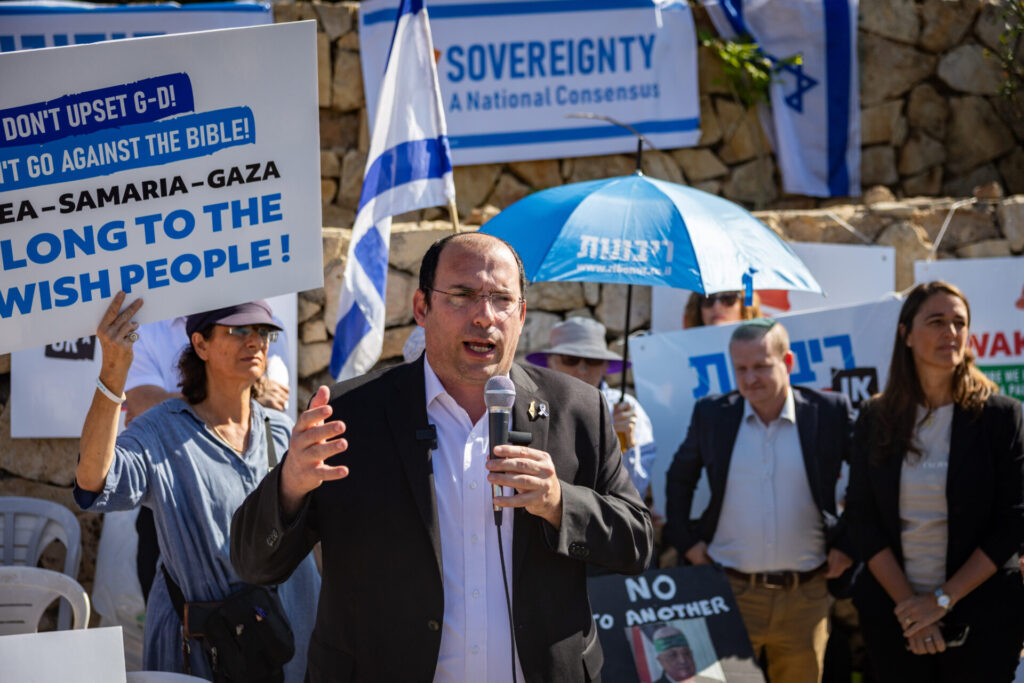
The latest wave of terror attacks briefly brought public attention back to what is happening in Judea and Samaria. But the issue that once decided elections has evaporated from the agenda. In the 2006 election, Olmert opened the “Kadima” campaign by declaring that “over the next four years we must shape Israel’s permanent borders and consolidate into the settlement blocs.” Netanyahu’s defeat in that election stemmed from broad support for a broad withdrawal. If Netanyahu is defeated in 2026, it will be because no one is talking about withdrawals.
“I never said a Palestinian state,” Eisenkot keeps repeating. Bennett says he is a right-winger; Lieberman likewise. They all read the polls showing how far the people have moved right, and they probably also read how absent the issue is. How absent? One of the moments that symbolized the shift came during one of the Kaplan protests, when Brothers in Arms activists forcibly took down an “End the Occupation” sign, so as not to hurt public support for the struggle.
So yes, 78% of the public say the issue of Judea and Samaria and a Palestinian state is important or very important. But when the public is asked to prioritize, this is the least important issue of all those examined. Cost of living at 35%, Haredi conscription at 18%, the war in Iran 17%, judicial reform 16%, and the future of Judea and Samaria at just 7%. Even among the religious public, only 12% see it as an important issue—a warning signal to Smotrich, whose entire party leadership lives in Judea and Samaria.
Still, one may assume this is temporary indifference. According to most polls, the very next government will see a sharp argument over the future of Judea and Samaria, as evidenced by several inflammatory statements from senior figures on the Democrats list. And by all assessments, the next administration in America will not shrug at what is happening beyond the Green Line either. The Israeli public would be well advised to replenish its reserves of interest in the subject.