





Let’s assume that Israel had decided to destroy Coca-Cola as an organization. Five army divisions would land in Atlanta, aiming to destroy the infrastructure and leadership. What are the chances that after two years of intense fighting, with ninety percent of the company’s top leadership eliminated and headquarters bombed, the recipe of the world’s most famous drink would survive? Probably very low. The secret is closely guarded by few.
But this isn’t Coca-Cola. It’s Hamas. And the secret survived.
Good news sometimes leads to grim thoughts. The good news: Hamas returned all the hostages’ bodies in its possession, except one. Before the deal was signed, the IDF assessed that some remains might never be returned because those who knew their locations had been killed. Yet except for Ran Gvili, who is still being searched for, all were found and returned. “Hamas isn’t making a one hundred percent effort, they’re making one hundred forty percent,” said a senior Israeli source.
How is this possible? The dilemma intensifies in light of Sinwar’s obsessive secrecy, his strict compartmentalization aimed at countering Israeli intelligence. That’s why Hezbollah was informed only an hour after the October 7 massacre began. That’s why the lone informant on the ground in Gaza could only say, “Something’s happening in the mosques, but I can’t get close.”
For Hamas, the hostages are nuclear weapons. The circle of those in the know was extremely limited. What are the chances they all survived to reveal the burial sites?
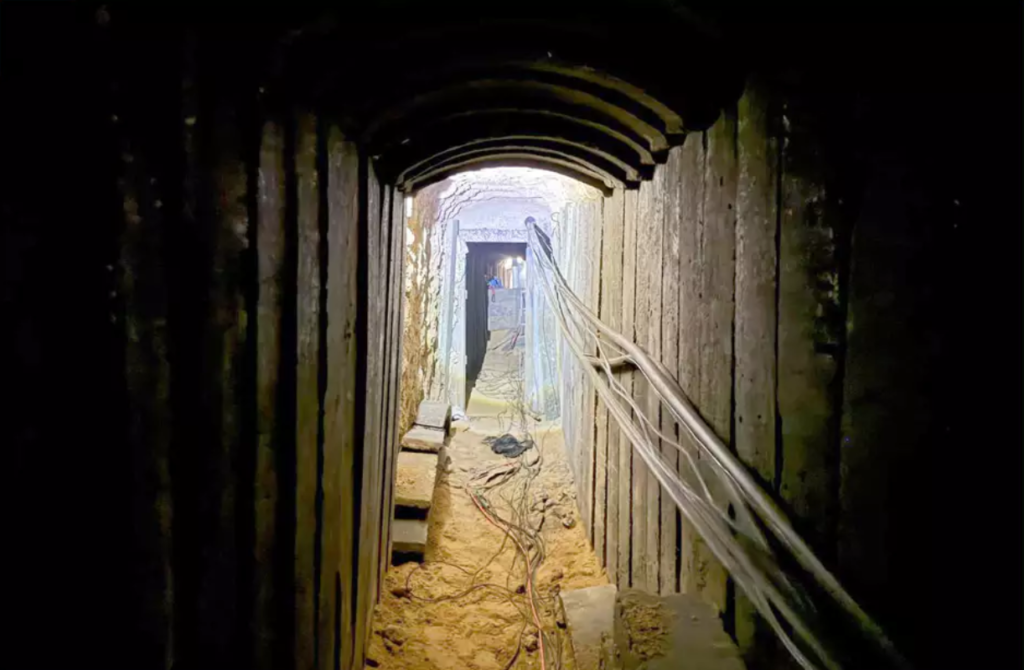
This also ties back to us, says a senior security official. Some people survived because they were in the know. For example, one man knew exactly which wall in the maze-like “Dror Lavan” tunnel in Rafah held Hadar Goldin. “We knew who held the information we lacked, and we acted accordingly,” he said—or rather, did not act. In other cases, the IDF recovered massive data caches, such as the archive found in the bunker where Muhammad Sinwar was killed. That archive helped recover eight bodies relatively quickly.
But there is another message here, one that shows just how long the road to Hamas’s destruction still is, and how “Phase Two” in Trump’s plan is still a strange fantasy. Hamas is disciplined, fanatical and messianic. Look, for example, at how long—and under what conditions—the terrorists survive underground in Rafah: with no future, no hope, no oxygen. For years, Israel thought this fanaticism could be calmed with work permits or expanded fishing zones, or that Hamas would disarm willingly. To return to the Coca-Cola metaphor: their “taste of life” is death.
This is an excerpt from my weekly column in Israel Hayom