






It seems the opposition doesn’t believe it will win a majority. So what’s next?
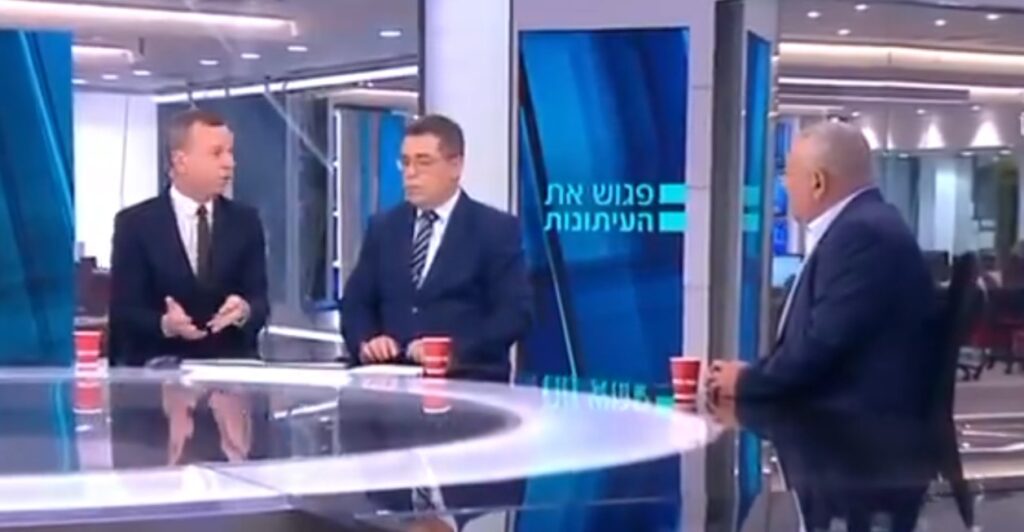
Gadi Eisenkot offered his solution last Saturday night when I interviewed him on Channel 12, hinting that if such were the election results, he would work to form a minority government with the abstention of the Arab parties.
Everyone was furious. Naftali Bennett was angry but refrained from public comment, but his week of silence speaks volumes. The last thing he wants is a campaign focused on Arabs instead of the ultra-Orthodox. He certainly doesn’t want to be dragged into another promise not to sit with Abbas, which would immediately transform the election into a campaign on his credibility. Avigdor Lieberman was angry, declaring he would not agree to such a government. Yair Golan was also angry, but for a different reason—he supports Ra’am being a full coalition partner.
The most surprising anger came from Abbas himself. Before the formation of the last “Change Government” in 2021, Ra’am’s leader set a rule: Either we vote in favor, or we vote against. He understood well that abstention is a free gift, but voting in favor has a price. He certainly doesn’t want to find himself lumped in with the other Arab parties who reject any partnership. He wants to be a legitimate partner, not a mistress.
Eisenkot has no regrets and hasn’t taken back his statement. Maybe it wasn’t planned, but the scenario he described has been discussed for a long time. In the Change Bloc, some now believe that Netanyahu has a very high chance of forming an obstruction bloc. The office of prime minister provides near-total control over the national agenda. Combined with the expected political boost from Trump, a senior source in the Change Bloc says it becomes almost impossible to keep public attention focused on ultra-Orthodox draft evasion.
Yes, he says, there’s no doubt we’ll pay a price if we form a government with Arab abstention. But in the immediate elections that would follow, whatever we lose from forming that government, we would gain by setting the public agenda, while Netanyahu would be an opposition member with no control. Besides, he added, why should Netanyahu set the rules of what’s allowed and what isn’t?
This is an excerpt from my weekly column in Israel Hayom