






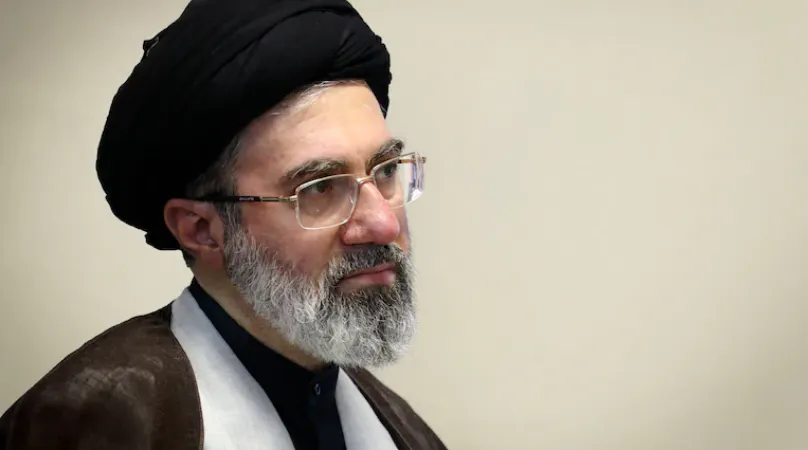
Much like the Groundhog Day, Washington and Jerusalem—from the think tanks to the command bunkers—are once again grappling with the exact same question they have faced before: Should Khamenei be assassinated? This time, however, it’s Mojtaba, not Ali. Other than that, almost everything is exactly the same.
In the heat of events, the fact that Israel had—for the first time in its history—killed the leader of an enemy state was overshadowed. The country had rehearsed the assassination of Iraqi President Saddam Hussein in 1992, but ultimately, due to an operational disaster, the mission did not materialize. It also toyed with the targeted killing of Palestinian Authority Chairman Yasser Arafat in 2002. Uri Dan, a confidant of then-Prime Minister Ariel Sharon, recounted asking him if Arafat had died naturally two years later. Sharon replied: “It’s better not to talk about it.” The United States had imposed an absolute veto on an overt assassination.
In 2026, the United States coordinated with Israel on the assassination of the leader of a country with nearly one hundred million residents, hoping to destabilize the regime’s foundations. That hope was partially fulfilled, or partially disappointed, depending on how you look at the glass. On the one hand, the undisputed, top-down control vanished. Iran sank into an internal battle, evident in attacks on the Gulf states that completely defied the political echelon’s position. The replacement son is pale, corrupt and wounded; it is doubtful whether he is leading or merely being dragged.
On the other hand, there is still a command structure; there is still someone to lean on. As long as there is an ayatollah named Khamenei, Iran maintains the facade of a functioning state. President Pezeshkian and Foreign Minister Araghchi do allow themselves to deviate slightly from the supreme leader’s rigid line on the nuclear issue—something they would never dare do during his father’s time—but they do not dare deviate much.
So in the war games, here is the dilemma: On one hand, Mojtaba is the last survivor, the only remaining natural heir. If he is assassinated, Iran could sink into leadership chaos that might help the more moderate wing secure an agreement. This is what Israel attempted in the Doha strike last September. It fired advanced missiles at the building housing the more recalcitrant wing of Hamas, the faction that had thwarted a hostage deal.
On the other hand, it’s not as if there are true moderates in Iran. If there is no Khamenei, no Anwar Sadat is waiting in the wings. Without him, there is the danger of securing an agreement that looks good on paper but is not fundamentally different from Barack Obama’s. Mossad Director David Barnea used to tell his American counterparts how, in the previous decade, the administration allayed his fears by arguing, “Who knows what will happen in the long term, in 2026, when the agreement begins to expire.” Well, here we are in 2026—welcome to the long term. Even if a different leadership agrees to freeze the nuclear program for 15 years, 2041 will eventually arrive just the same.
In short, a severe dilemma.
This is an excerpt from my weekly column in Israel Hayom