






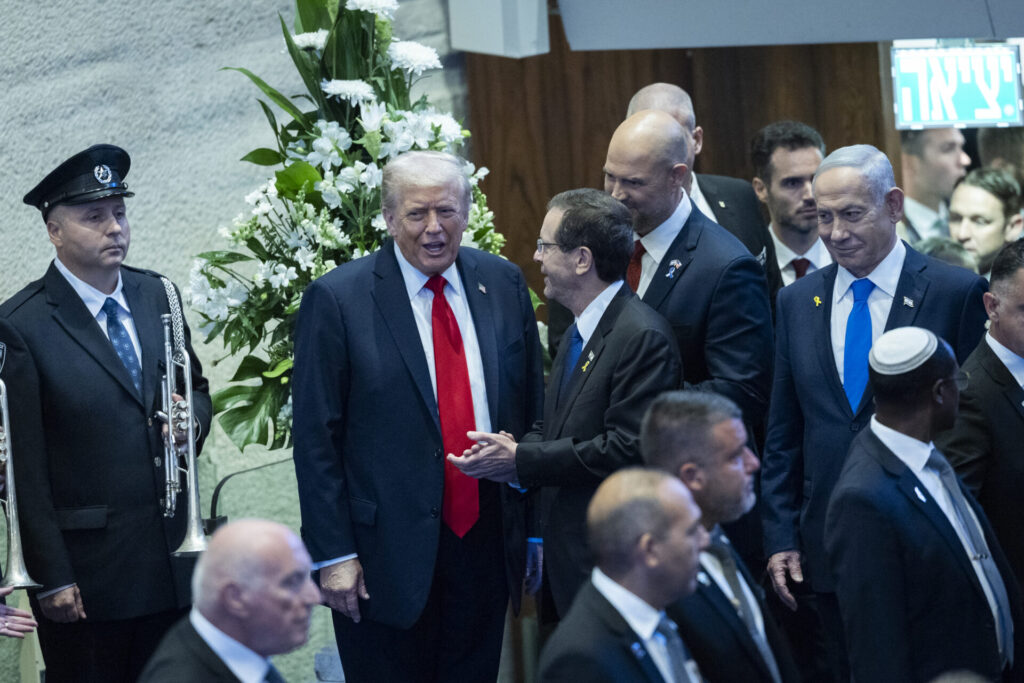
Some people are experts at delaying gratification. One gets the impression that Trump is not among them.
He reportedly scolded President Herzog for delaying, in his view, too long in granting Netanyahu a pardon.
The coming months may give him an opportunity to exercise that muscle. For the president, Netanyahu’s trial—dramatic as it is—is merely a symptom of a deeper problem.
His years as president have turned him into a traffic cop at the intersection between the judicial system and the right-wing camp. That intersection is now blocked after a massive pile-up.
Netanyahu’s trial introduced a criminal interpretation of bribery for actions that had previously been considered part of politics or its margins (so far, according to the judges’ comments, not with great success). In response, the right rallied around judicial reform, interpreting the judiciary as a political center that must be defeated.
Then came the disaster of October 7 and the need to establish a commission of inquiry—along with the argument over whether Supreme Court justices should appoint investigators of politicians.
To clear the intersection, a comprehensive deal will be needed.
If Herzog does not grant a full pardon, the trial will continue—and the political brawl will continue. If he does grant one, the coalition will continue the judicial reform and the opposition will continue believing justice was not done.
The problem is obvious: how can such a package deal be reached on the eve of elections?
Suppose agreement is reached on judicial legislation by consensus. Who exactly will honor it? Smotrich, Ben-Gvir, and parts of Likud could say: elect us, and after the election we will renew all efforts to dismiss the attorney general and reshape the Supreme Court.
In legal language: how can two parties to a contract bind a third party?
Therefore it seems the decisive moment in the pardon discussions will arrive only after the elections, during coalition negotiations.
If, as most polls suggest, neither bloc has a majority, it is not unreasonable to imagine that the President’s Residence will host two parallel marathons: consultations on forming a government—and negotiations on a comprehensive deal.
The designated prime minister and his prospective partner from the opposing camp, together with the attorney general and the president, could discuss a framework: ending the trial, establishing a state commission of inquiry with an agreed composition, and passing a Basic Law on legislation including consensual reforms to the judicial system.
The High Court would not be a problem in such a case. This week the former attorney general Yitzhak Zamir published his book:
“Was the pardon granted to the Shin Bet personnel [in the Bus 300 affair] the right and proper act? … I wrote an opinion to President Chaim Herzog stating that only criminals could be pardoned, not those still presumed innocent and not yet convicted. It turns out that legally I was mistaken—in the Shin Bet affair the Supreme Court ruled that the president may pardon them even if no indictment has yet been filed.”
One less problem.